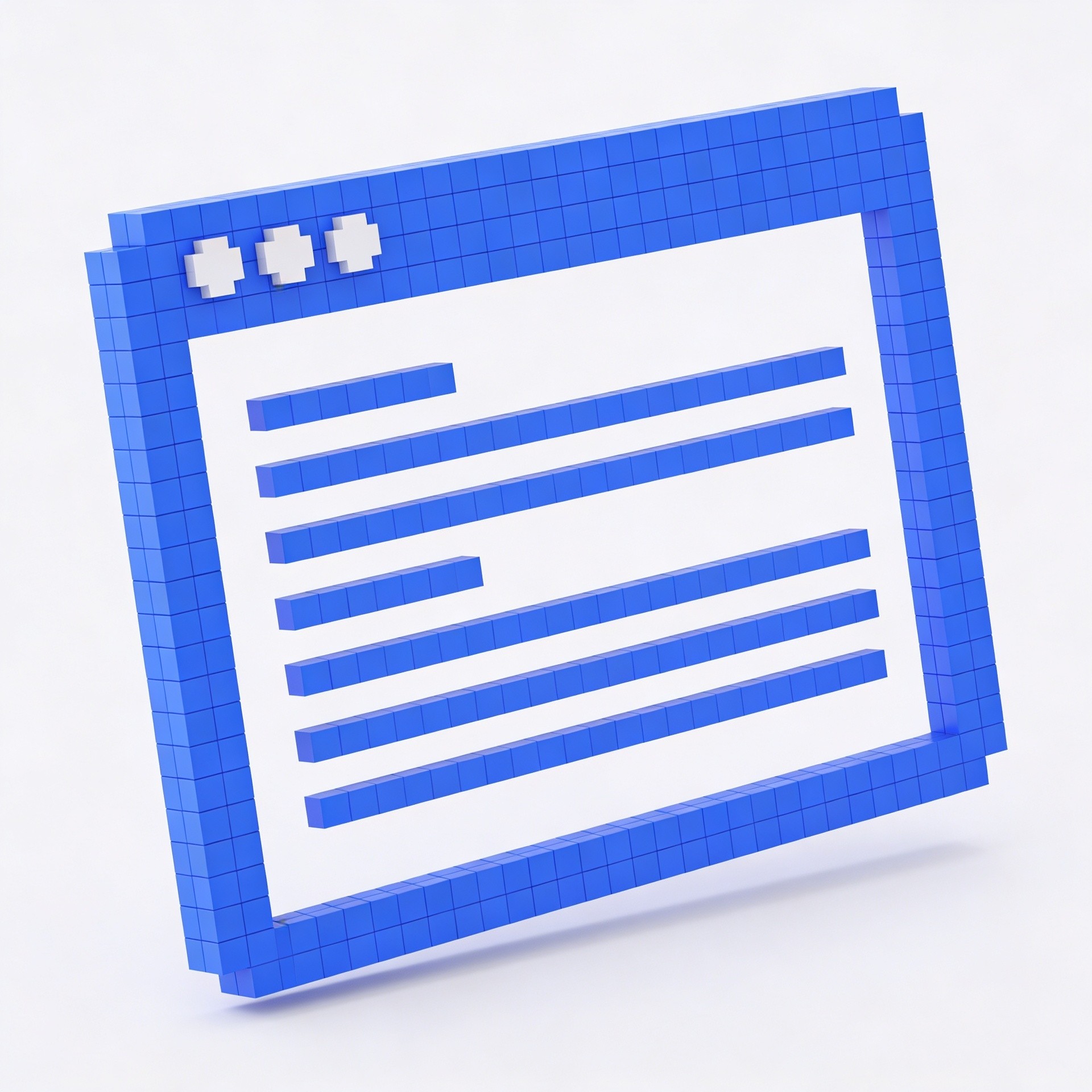
Design Trends That Are Shaping Modern Websites
Web design is moving fast — and the sites that feel current aren't following trends blindly. They're applying a specific set of principles that reflect how people actually use the web today. Here's what's shaping modern website design right now.

2
min read
|
Category
/ All Categories
/ All Topics
/ Share It On:
Web design trends move in cycles. What feels fresh today becomes familiar tomorrow and dated next year. But beneath the surface-level aesthetic shifts — the colors, the typography choices, the motion styles — there are deeper patterns that reflect genuine changes in how people use the web and what they expect from it.
The trends worth paying attention to aren't the ones that are visually distinctive right now. They're the ones that reflect something true about where design is going — and that will still feel right when the surface-level aesthetics have moved on.
Here's what's actually shaping modern website design, and why it matters for creators building their web presence now.
Radical simplicity and whitespace
The dominant direction in web design right now is toward less — fewer elements, more whitespace, cleaner layouts, more deliberate use of every element on the page.
This isn't minimalism as an aesthetic pose. It's a response to the reality that most websites have historically been too busy — too many competing elements, too much visual noise, too little breathing room. Readers' attention is more fragmented than ever, and websites that demand significant cognitive work to navigate are losing visitors faster than ever.
The sites that feel most current give content space to breathe. Generous margins, careful typography, deliberate hierarchy — these create an experience that feels calm and trustworthy rather than busy and pressured. The content becomes the design rather than competing with it.
For content creators specifically, this direction is worth taking seriously. The temptation to fill available space — more widgets, more sidebar content, more calls to action — consistently produces worse results than restraint. The sites that hold readers' attention longest tend to be the ones that remove distractions rather than adding features.
Typography as the primary design element
Type has always been important in web design. What's changed is the degree to which typography is now doing work that used to require visual elements — images, icons, decorative elements — to accomplish.
Variable fonts — typefaces that contain multiple weights and widths in a single file — have enabled typographic expression that wasn't practical at web scale until recently. Large, confident headline treatments. Carefully considered type scales that create clear hierarchy without relying on color or imagery to establish it. Typography that expresses brand character rather than just conveying information.
The sites leading this trend are often the most visually striking despite using minimal imagery. The type does everything — creates mood, establishes hierarchy, communicates personality. For content-focused sites especially, where the writing is the product, strong typography is both the most honest design approach and increasingly the most aesthetically distinguished one.
Performance as a design value
Speed has always been a technical consideration in web design. It's increasingly becoming a design value — something that's considered in design decisions rather than only in technical implementation.
The connection between site performance and user experience has become impossible to ignore. Sites that load slowly, that have layout shifts as elements load in, that create jank during scrolling — these feel broken in ways that undermine the credibility of everything else on the page. A beautifully designed site that loads slowly is a worse user experience than a simply designed site that loads instantly.
This is reshaping design decisions in practical ways. Large, unoptimized images are being replaced by carefully optimized ones. Heavy animation and interaction effects are being evaluated against the performance cost they carry. Design systems are being built with performance budgets alongside visual specifications.
For creators choosing platforms and templates for their web presence, performance is worth treating as a primary criterion rather than an afterthought. The aesthetic choices made in a template don't matter much if the site loads slowly enough to drive visitors away before the design registers.
Authentic imagery over stock photography
Stock photography has dominated the web for decades — the same cast of smiling professionals in generic office settings, the same staged scenarios that look like no actual human interaction that has ever occurred. That era is ending.
The websites that feel most credible and most connected to their audience are using imagery that feels real — photography that reflects actual people, actual situations, actual aesthetics rather than the sanitized and generic world of stock libraries. For personal brands and independent creators, this often means using real photography of yourself and your actual environment rather than generic imagery.
AI-generated imagery is filling some of this space — enabling custom visual content that's specific to the context it's used in rather than generic stock imagery. The quality has reached a point where AI-generated editorial and conceptual imagery is often indistinguishable from photography in the contexts where it's typically used on content sites.
The underlying principle is specificity. Imagery that feels specific to your content, your voice, and your audience builds the kind of trust that generic imagery actively undermines. Whatever the source — real photography, custom illustration, AI generation — the goal is visual content that feels like it belongs to your specific site rather than borrowed from a library.
Micro-interactions and purposeful motion
Motion has been a web design tool for as long as the web has supported it. What's changed is the sophistication with which motion is being applied and the restraint with which the best designers are using it.
The era of motion as decoration — parallax effects, animated backgrounds, transitions that exist to show off technical capability — is giving way to motion as communication. Micro-interactions that confirm an action has been taken. Transitions that maintain spatial context as users navigate. Animations that guide attention rather than demand it.
The principle behind this shift is that motion should earn its presence by doing something useful. Every animation that doesn't communicate something specific is visual noise — and visual noise has a cost in attention and performance that purposeful motion doesn't.
For creators building content sites, this has practical implications. A subtle hover state on a card communicates interactivity without demanding attention. A smooth transition between pages maintains context without disrupting reading flow. A loading animation reduces perceived wait time without adding visual complexity. These are the kinds of motion worth including — purposeful, specific, restrained.
Dark mode and adaptive design
Dark mode support has moved from a nice-to-have to an expected feature for modern websites. A significant portion of users browse in dark mode by preference, and sites that don't adapt to that preference create a jarring experience that feels like a product quality issue.
Beyond dark mode specifically, the broader trend is toward adaptive design — sites that respond not just to screen size but to user preferences and context. Reduced motion settings for users who prefer less animation. High contrast modes for accessibility. Font size preferences that persist across sessions.
The web platform has built the tools to support these adaptations. The design work involved in supporting them is significant but increasingly expected by audiences who have experienced it elsewhere and notice its absence.
The throughline
Looking across these trends, the common thread is consideration — design that reflects careful thought about who the site is for and what they actually need from it. Simplicity that comes from removing what doesn't serve the reader. Typography that reflects the content's character. Performance that respects the reader's time. Imagery that creates genuine connection rather than generic presentation.
The surface aesthetics of web design will keep shifting. But the underlying direction — toward more consideration, more specificity, more genuine responsiveness to how people actually use the web — points somewhere worth following.
/ Frequently Asked Questions
Do I need to follow design trends to have a good website?
How important is website speed for creator sites?
Should I support dark mode on my website?
How often should a creator refresh their website design?
Is AI-generated imagery appropriate for creator websites?
/ Previous Blog
/ Next Blog
Subscribe to Narric
Get the latest articles, guides, and insights delivered directly to your inbox — curated for creators who want to stay ahead.
Stay up to date
No spam, unsubscribe any time.
By subscribing you agree to our Privacy Policy.
