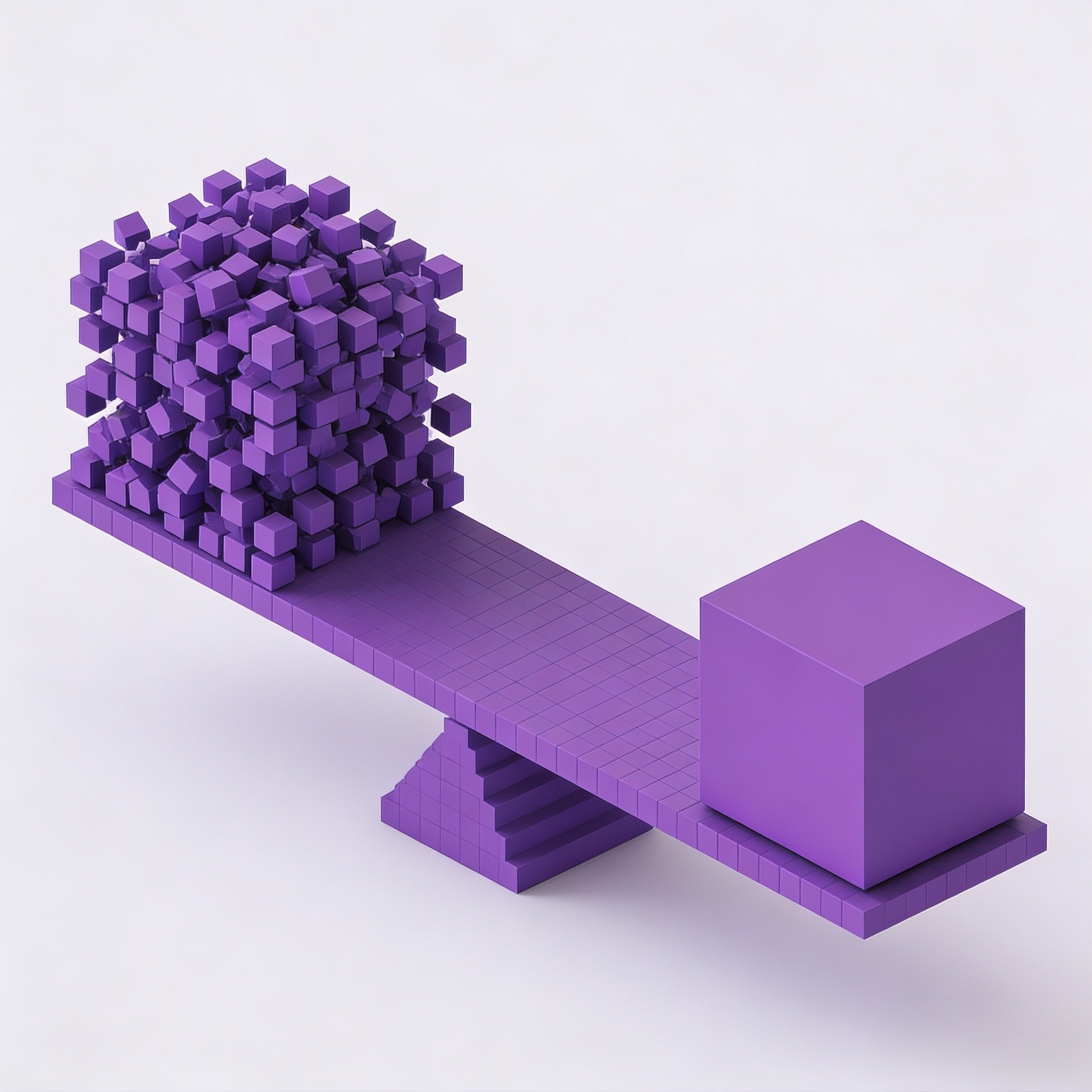
Why Minimal Design Wins in Modern Branding
Minimal design isn't a trend — it's a response to how people actually experience brands today. In a world of visual noise, restraint is a competitive advantage. Here's why less continues to win in modern branding and what it actually takes to do it well.

6
min read
|
Category
/ All Categories
/ All Topics
/ Share It On:
Every few years, someone declares minimalism dead. The pendulum is swinging back, they say. Maximalism is having a moment. Brands are embracing color, complexity, personality.
And then you look at the brands that are actually winning — the ones building genuine loyalty, commanding premium pricing, and expanding into new markets — and most of them are still clean. Still restrained. Still making deliberate choices about what to include and what to leave out.
Minimal design isn't a trend that cycles in and out. It's a response to something structural about how people experience brands in a world of overwhelming visual noise. Understanding why it works is more useful than following it as a style preference.
The attention economy argument
The average person encounters thousands of brand impressions every day. Ads, logos, packaging, social posts, websites, notifications — the visual environment is more saturated than at any point in human history.
In that environment, the brands that get noticed aren't always the loudest ones. They're often the quietest — the ones that create contrast with the noise by refusing to contribute to it. A clean, restrained visual identity in a sea of competing visual demands is itself attention-getting, in the same way that a quiet voice in a noisy room creates more curiosity than another loud one.
This is the counterintuitive logic of minimal design in a saturated attention economy. When everything is competing for attention through complexity and volume, simplicity becomes the differentiator. The brand that trusts its identity enough to not shout is often the one that gets heard.
Clarity as a brand value
Minimal design communicates something beyond aesthetics. It signals a set of values — clarity, confidence, intentionality — that transfer to the product or service the brand represents.
A brand with a clean, restrained visual identity is implicitly saying that it knows what it is and doesn't need visual complexity to compensate for uncertainty. That confidence reads as competence. The consumer inference — not always conscious — is that a brand disciplined enough to make strong design decisions is probably disciplined in other ways too.
The reverse is also true. Visual complexity and inconsistency signal uncertainty — a brand that isn't sure what it is, that's trying to appeal to everyone, that hasn't made the hard decisions about what to include and what to leave out. Those signals transfer too, and not in the brand's favor.
This is why premium brands almost universally trend toward simplicity as they mature. Complexity is often a symptom of early-stage identity uncertainty. As a brand develops clarity about what it is and who it's for, the visual identity tends to simplify — not because minimalism is fashionable, but because clarity of identity naturally expresses itself in visual restraint.
The longevity advantage
Trend-driven design ages. The visual styles that feel current in any given year feel dated within five — sometimes sooner. Brands that build their identity around trend-specific aesthetics face the constant work of refreshing that identity as trends move.
Minimal design ages much more slowly. The foundational principles — clear typography, generous whitespace, restrained color palette, purposeful use of every element — produce visual identities that feel considered rather than current. They don't date in the way that trend-specific aesthetics date because they're not drawing their authority from trend relevance.
For brands making long-term investments in identity, this longevity has significant practical value. A visual identity that requires major refresh every three years is an ongoing cost — in money, in the disruption of established recognition, and in the creative work of rebuilding something that should already exist. A minimal identity designed on sound principles can remain current for a decade with only minor evolution.
What minimal design actually requires
The most common misconception about minimal design is that it's easy — that doing less is inherently simpler than doing more. The opposite is true.
Minimal design is harder than complex design because it removes the cover that complexity provides. Every element that remains in a minimal design is exposed — there's nothing around it to distract from it or compensate for it if it's wrong. The typography has to be excellent because there's nothing else carrying the design. The spacing has to be considered because there's no visual noise to obscure careless spacing decisions. The color choices have to be precise because a small palette leaves no room for colors that don't earn their place.
This is why genuinely minimal design is rare. Most attempts at minimalism are just stripped-down complexity — the same underlying design decisions with decorative elements removed. True minimalism requires making every remaining element carry more weight — which means every element has to be strong enough to bear it.
The discipline of minimal design is also a creative constraint that's harder than it sounds to maintain. The instinct when something feels incomplete is to add — another element, another color, another piece of information. Minimal design requires resisting that instinct and asking instead what can be removed rather than what can be added. That question produces different and usually better answers.
Typography as the primary design tool
In minimal design, typography does more of the work than in complex design — and the quality of typographic decisions shows more clearly because there's less else to look at.
The brands that do minimal design best have invested seriously in typography. Not just choosing a typeface — developing a complete typographic system with clear hierarchy, considered scale, and consistent application across every touchpoint. The headline treatment. The body text. The captions and labels. The way different type elements relate to each other spatially.
When typography is the primary design tool, its quality is everything. A poor typeface choice in a minimal design is more damaging than in a complex one because there's nothing else to redirect attention. A strong typographic system in a minimal design is more rewarding because it has space to express itself fully.
This is why some of the most memorable minimal brand identities are essentially typography-first — the logo is a wordmark, the visual system is built around consistent type treatment, and the only other design elements are spacing and occasional restrained use of color.
Color restraint and the power of a limited palette
Minimal design typically uses a restricted color palette — often one or two primary colors with neutrals, sometimes only neutrals. That restriction creates the visual coherence that allows a brand to be recognized across contexts.
The power of a limited palette is recognition. A brand that uses the same three colors consistently across every touchpoint becomes associated with those colors in a way that a brand with a broad palette can't achieve. That color recognition is a form of brand equity — it means the brand can be identified before a logo or name is even visible, purely through color association.
Building that color equity requires restraint that many brands struggle with. The instinct to use color broadly — to express range, to avoid monotony, to signal variety — works against the consistency that builds recognition. The brands with the strongest color recognition are the ones that have been disciplined enough to say these are our colors and mean it consistently over years.
Minimal design for creators and personal brands
The principles of minimal design are particularly relevant for creators and personal brands — not just for large companies with dedicated design resources.
A creator's visual identity — the look of their website, their newsletter, their social presence — communicates something about them before a word is read. A clean, considered visual identity signals the same things it signals for a company: clarity, intentionality, confidence. It creates a reading environment that respects the content rather than competing with it.
For creators specifically, minimal design has a practical advantage beyond brand signaling. A simple, restrained visual system is easier to maintain consistently than a complex one — which matters for solo creators who are managing design alongside everything else they do. Simplicity is more sustainable, which means it's more likely to remain consistent over time. And consistency is what builds recognition.
The goal isn't minimal for its own sake. It's minimal because it serves the content and the audience better than complexity does — because it creates the conditions for the work to be experienced fully rather than competing with it for attention.
That's the real argument for minimal design. Not that it's fashionable. Not that it's easier. But that in a world of visual noise, restraint is a form of respect — for the audience's attention, for the content, and for the identity being expressed.
/ Frequently Asked Questions
Is minimal design suitable for all types of brands?
How do I know if my design is minimal or just unfinished?
Can a minimal brand still have a strong personality?
How many colors should a minimal brand use?
Is it possible to go too minimal?
/ Previous Blog
/ Next Blog
No items to show
Subscribe to Narric
Get the latest articles, guides, and insights delivered directly to your inbox — curated for creators who want to stay ahead.
Stay up to date
No spam, unsubscribe any time.
By subscribing you agree to our Privacy Policy.
